

Slowest Century in T20 Cricket
T20 cricket is normally related to explosive batting, quick obstacles, and centuries scored in less than 50 balls. However, now not each hundred in T20 cricket comes at a rapid tempo. Some innings had been built slowly due to tough pitch conditions, stress conditions, or a strategic technique. This brings us to one of the most unusual facts in cricket — the slowest century in T20.
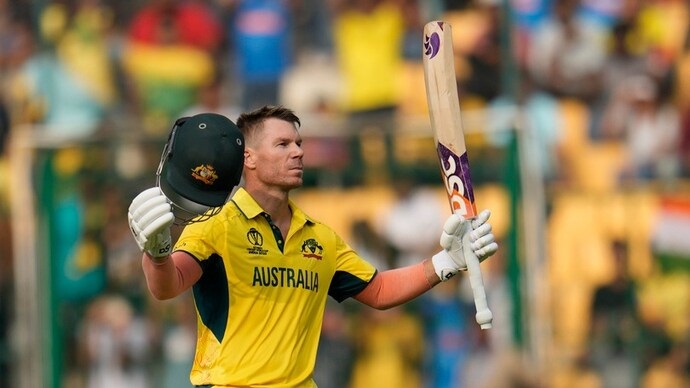
As of the cutting-edge formally recognized data, the slowest century in T20 International (Men’s T20I) cricket was scored with the aid of David Warner against West Indies in 2024.
Slowest T20I Century Record
| Detail | Record |
| Player | David Warner |
| Opponent | West Indies |
| Runs | 102 |
| Balls Faced | 69 |
| Strike Rate | 147.82 |
| Venue | Perth Stadium |
| Date | 13 February 2024 |
| Result | Australia won |
Why Is This Considered the Slowest T20I Century?
In guys’s T20 International cricket, most centuries are scored between 40 and 60 balls. Warner’s hundred came off 69 balls, that is presently the slowest century among all guys’s T20I masses.
Although a strike rate of 147.82 continues to be decent in T20 cricket, the range of balls required to reach the century makes it the slowest T20I hundred on file.
Ball-by way of-Ball Progression of Warner’s Century
| Milestone | Balls Taken |
|---|---|
| 25 runs | 22 |
| 50 runs | 36 |
| 75 runs | 52 |
| 100 runs | 69 |
Top 10 Slowest Centuries in Men’s T20I Cricket
| Rank | Player | Balls for 100 |
| 1 | David Warner | 69 |
| 2 | Babar Hayat | 67 |
| 3 | Virat Kohli | 67 |
| 4 | Suryakumar Yadav | 66 |
| 5 | Rohit Sharma | 66 |
| 6 | KL Rahul | 64 |
| 7 | Glenn Phillips | 64 |
| 8 | Rilee Rossouw | 63 |
| 9 | Jos Buttler | 62 |
| 10 | Mohammad Rizwan | 62 |
Slowest T20 Century in Overall T20 Cricket
When domestic leagues and different diagnosed T20 suits are protected, numerous centuries have taken even more balls than Warner’s T20I hundred. However, information can range depending at the opposition and statistical supply.
Comparison: Fastest vs Slowest T20I Century
| Record | Player | Balls |
| Fastest T20I Century | Sahil Chauhan | 27 |
| Slowest T20I Century | David Warner | 69 |
Difference Between the Two Records
The difference among the fastest and slowest T20I century is 42 balls, highlighting how varied batting situations and in shape conditions may be in the shortest format.
Factors That Lead to a Slow Century in T20 Cricket
Several motives can result in a batter achieving 100 slowly:
- Difficult Pitch Conditions: Slow or two-paced wickets make boundary hitting difficult.
- Large Ground Dimensions: Bigger outfields reduce the range of sixes.
- Strong Bowling Attack: Quality bowlers can restrict scoring possibilities.
- Anchoring the Innings: A batter may also prioritize staying on the crease whilst wickets fall around them.
- Chasing a Modest Target: The required run price might not demand competitive batting.
Match Conditions: Australia vs West Indies (2024)
| Factor | Details |
| Venue | Perth Stadium |
| Pitch | Good batting surface |
| Target | Australia batted first |
| Boundary Count | 12 fours, 3 sixes |
| Strike Rate | 147.82 |
| Innings Result | 102 off 69 balls |
How Warner’s Century Compared With His Career T20I Strike Rate
| Statistic | Value |
| Career T20I Strike Rate | 140+ |
| Strike Rate in the Century | 147.82 |
| Balls per Boundary | 4.6 |
| Balls per Six | 23 |
Interestingly, no matter being the slowest T20I hundred, Warner’s strike rate was nonetheless barely above his career common, showing that the innings turned into no longer shielding but simply took greater balls to attain the milestone.
Most Memorable Slow T20 Centuries
| Player | Runs | Balls | Year |
| David Warner | 102 | 69 | 2024 |
| Virat Kohli | 122* | 67 | 2022 |
| Rohit Sharma | 100* | 66 | 2017 |
| Suryakumar Yadav | 112* | 66 | 2023 |
Why This Record Is Unique
Unlike facts for fastest centuries, the slowest century is rare because batters generally boost up after they pass 70 or 80 runs. Reaching one hundred after ingesting 69 balls in a 20-over fit approach the batter used extra than half of of the group’s innings.
This makes Warner’s knock statistically uncommon and a tremendous a part of T20I history.
FAQs
Who scored the slowest century in T20I cricket?
David Warner scored the slowest guys’s T20I century, attaining 100 in 69 balls against West Indies in 2024.
How many balls did the slowest T20I century take?
The report century took 69 balls.
What was the strike fee of the slowest T20I century?
The strike rate changed into 147.82.
Is this the slowest century in all T20 cricket?
No. It is the slowest men’s T20 International century. Some domestic T20 competitions have recorded centuries that took more balls.
Who holds the quickest T20I century document?
Sahil Chauhan holds the quickest T20I century report with a 27-ball hundred.
Conclusion
The slowest century in T20 International cricket belongs to David Warner, who reached his hundred in 69 balls in opposition to West Indies in 2024. While T20 cricket is known for competitive batting, this innings confirmed that a batter can nevertheless dominate a suit through controlled accumulation and smart strike rotation.
Warner’s record stands in sharp contrast to the fastest T20I centuries and remains one of the maximum captivating statistical milestones in present day cricket.