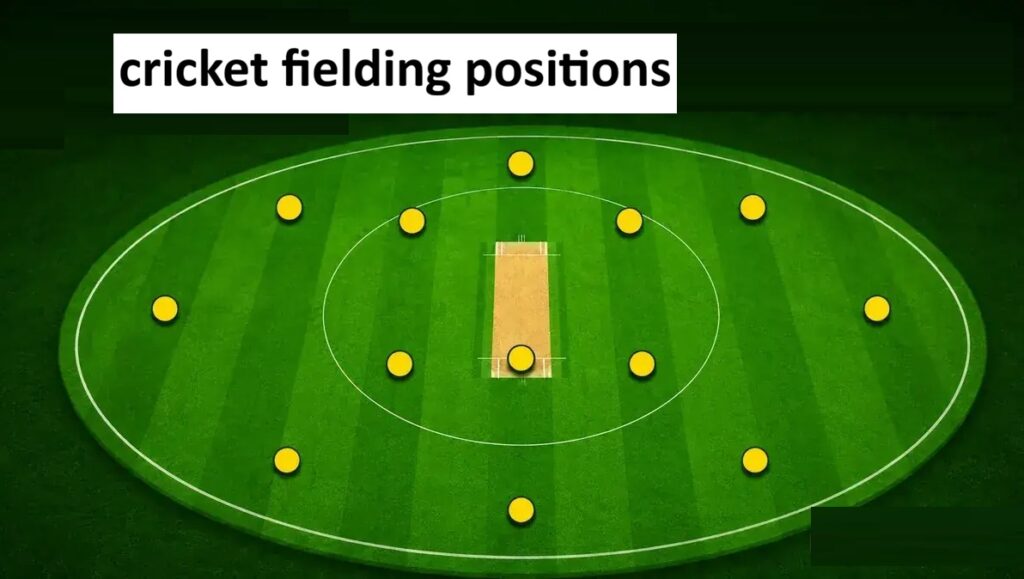

Cricket Fielding Positions:
Cricket isn’t always handiest a recreation of batting and bowling. Fielding plays an similarly important role in controlling the fit, saving runs, developing strain, and taking wickets. Every player on the sphere has a selected role and responsibility. Understanding cricket fielding positions can help new lovers, gamers, and rookies apprehend how a captain plans a bowling attack and how fielders paintings collectively.
From the wicketkeeper status at the back of the stumps to the slips awaiting an part, every function has a purpose. Fielding positions can also change according to the batter, bowler, in shape layout, pitch situations, and scenario of the sport.
What Are Cricket Fielding Positions?
Cricket fielding positions are the one-of-a-kind areas of the cricket field in which gamers stand whilst the opposition is batting. A captain locations fielders in unique areas to forestall runs, create possibilities of catching the batter, and support the bowler.
A general cricket group has 11 players. One participant bowls while the other ten players are worried in fielding, despite the fact that the bowler also becomes a fielder after finishing the transport. The wicketkeeper has a specialised function in the back of the stumps, while the ultimate fielders can be located in numerous areas around the pitch.
Fielding positions are typically divided into areas which include the off facet, leg facet, near catching positions, inner ring, and deep boundary positions.
Main Cricket Fielding Positions
There are many named positions in cricket. Some are used regularly, at the same time as others are used consistent with a particular bowling plan or healthy situation.
| Fielding Position | Location | Main Responsibility |
|---|---|---|
| Wicketkeeper | Behind the stumps | Collect deliveries and catch edges |
| Slip | Behind and beside wicketkeeper | Catch edges from the bat |
| Gully | Behind square on off side | Catch thick edges |
| Point | Square on off side | Stop cuts and save runs |
| Cover | Off side, in front of square | Stop cover drives |
| Extra Cover | Between cover and mid-off | Stop attacking off-side shots |
| Mid-Off | Near straight on off side | Stop drives and support bowler |
| Mid-On | Near straight on leg side | Stop straight drives |
| Midwicket | Square to the leg side | Stop shots toward midwicket |
| Square Leg | Square on leg side | Stop pulls and sweeps |
| Fine Leg | Behind square on leg side | Stop glances and leg-side shots |
| Third Man | Behind square on off side | Stop edges and deflections |
| Long-On | Deep straight leg side | Stop lofted shots |
| Long-Off | Deep straight off side | Stop lofted drives |
| Deep Midwicket | Deep leg side | Stop powerful leg-side shots |
| Deep Cover | Deep off side | Stop boundaries through cover |
| Short Leg | Close to batter on leg side | Catch defensive leg-side edges |
| Leg Slip | Behind batter on leg side | Catch fine leg-side edges |
Wicketkeeper
The wicketkeeper is one of the most critical fielding positions in cricket. The wicketkeeper stands without delay at the back of the stumps on the striker’s cease.
The keeper’s principal activity is to accumulate balls that skip the batter, specially deliveries that the batter does not hit. The wicketkeeper also can take catches, whole stumpings, stop byes, and assist in run-out opportunities.
A excellent wicketkeeper desires speedy reflexes, attention, flexibility, and superb anticipation.
Slip Fielders
Slip positions are placed in the back of the batter on the off facet and close to the wicketkeeper. Depending at the bowling state of affairs, a captain may also use first slip, 2d slip, 1/3 slip, or maybe greater slip fielders.
Slip fielders are in particular critical for fast bowlers and swing bowlers because outdoor edges can travel fast in the direction of this area.
The slip fielder needs extremely good hand-eye coordination and brief reactions.
Gully
The gully role is positioned wider than the slips and at the back of square at the off aspect. It is frequently used while a bowler is attempting to provide an out of doors side.
A batter gambling a reduce or protecting shot can send a thick edge closer to gully. Therefore, this role can be precious whilst the captain expects the ball to move away from the bat.
Point
Point is one of the maximum recognizable cricket fielding positions. It is placed rectangular to the batter at the off facet.
The factor fielder attempts to prevent square cuts, late cuts, and other pictures performed through the off side. A strong point fielder can save numerous runs throughout an innings.
Cover and Extra Cover
Cover is positioned between factor and mid-off. The fielder’s foremost obligation is to forestall pictures performed via the duvet vicinity.
Extra cowl is positioned in the direction of mid-off. Both positions are crucial in opposition to batters who are sturdy at driving the ball through the off facet.
Captains regularly alter these positions relying on the batter’s preferred scoring regions.
Mid-Off
Mid-off is positioned particularly immediately at the off facet and inside the fielding circle in limited-overs cricket.
The mid-off fielder enables prevent immediately drives and gives help for the bowler. The position also can be moved deeper whilst the captain desires to protect in opposition to lofted pictures.
Mid-On
Mid-on is just like mid-off but is placed at the leg aspect. It is generally positioned close to the instantly boundary line from the bowler’s end.
The mid-on fielder tries to prevent immediately drives and different photographs in the direction of the leg side. In a few conditions, the fielder may be positioned towards the pitch to create stress and prevent smooth singles.
Midwicket
Midwicket is placed on the leg facet between mid-on and square leg.
This position is specially essential because many batters play sturdy photographs via the midwicket region. Pulls, flicks, and on-drives can tour closer to this region.
A captain may also role a fielder at midwicket when the bowler is targeting the batter’s pads or body.
Square Leg
Square leg is located about square to the batter at the leg aspect. It is normally used to prevent pulls, sweeps, and other shots played behind square.
Square leg also can emerge as essential for catching possibilities whilst a batter attempts an competitive shot.
Fine Leg
Fine leg is positioned behind rectangular at the leg facet. This location is regularly centered by means of batters gambling glances, flicks, and deflections.
A best-leg fielder may be positioned close or deep relying on the suit scenario. In restrained-overs cricket, the deep pleasant-leg function is often used to guard the boundary.
3 Man
3 guy is positioned in the back of square at the off aspect, commonly close to the boundary in constrained-overs cricket.
This fielder is specially important while the ball can take an out of doors part and tour towards the boundary. Third man can save you 4 runs from edges and guide pictures.
Long-Off and Long-On
Long-off is a deep fielding position at the off facet, while long-on is located deep on the leg facet.
Both positions are generally used at some point of the later stages of constrained-overs innings. Their principal cause is to prevent lofted drives and huge photographs from accomplishing the boundary.
| Position | Side | Typical Shot It Defends |
|---|---|---|
| Long-Off | Off side | Lofted drives |
| Long-On | Leg side | Straight lofted shots |
| Deep Midwicket | Leg side | Pulls and slog shots |
| Deep Cover | Off side | Lofted cover drives |
| Deep Square Leg | Leg side | Pulls and sweeps |
| Third Man | Off side | Edges and deflections |
| Fine Leg | Leg side | Glances and flicks |
Close-In Cricket Fielding Positions
Some fielders stand very near the batter. These positions are normally used to create wicket-taking possibilities.
Short Leg
Short leg is positioned close to the batter on the leg aspect. The fielder must react quickly due to the fact the ball can tour in the direction of the placement at high speed.
Short leg is generally used against spin bowling whilst the captain expects the batter to play a protecting shot.
Silly Point
Silly point is another close-catching function at the off aspect. The fielder stands very close to the batter and wishes shielding device due to the fact the ball can journey speedy.
This role is often used in opposition to spin bowlers to create strain and inspire a mistake.
How Captains Choose Cricket Fielding Positions
Field placement isn’t random. Captains recall numerous elements earlier than deciding in which each fielder ought to stand.
Type of Bowler
A speedy bowler might also receive slips, gully, point, and 0.33-man guide. A spin bowler may have close-in fielders such as short leg or stupid point.
Type of Batter
Captains examine the batter’s strengths and weaknesses. If a batter frequently ratings through cowl, the captain might also toughen that region.
Match Format
Fielding preparations differ among Test cricket, 1 Day Internationals, and T20 cricket. Limited-overs formats commonly location extra significance on boundary safety and fielding restrictions.
Match Situation
If the batting group wishes only a few runs, the captain can also region more fielders close to the boundary. If a wicket is urgently required, extra attacking fielders may be placed near the batter.
Pitch Conditions
The pitch and weather also can impact area settings. Swing-pleasant situations may encourage extra slip fielders, at the same time as a turning pitch can lead to extra close-catching positions.
Cricket Fielding Positions in Different Formats
| Format | Common Fielding Focus |
|---|---|
| Test Cricket | Attacking catches, slips, close fielders |
| ODI Cricket | Balance between wickets and boundary protection |
| T20 Cricket | Boundary saving, catching opportunities, strategic placements |
| Domestic Cricket | Depends on competition rules and match situation |
Why Fielding Positions Matter
Understanding cricket fielding positions makes it simpler to observe tactical decisions all through a healthy.
A captain may also move a fielder just a few meters because a batter has commenced focused on a specific place. A bowler may also change the road and period of deliveries primarily based on the sphere.
For instance, if a captain locations a fielder at deep rectangular leg, the bowler might also attack the batter’s body and inspire a pull shot. If numerous slips are present, the bowler might also deliver outside the off stump and search for an part.
Therefore, area placement and bowling method are intently related.
Common Fielding Position Changes During a Match
Fielders are often moved between deliveries or overs. A captain might also make modifications while:
- A new batter arrives.
- The batter changes their scoring strategy.
- The bowler changes.
- The required run fee increases.
- A partnership turns into dangerous.
- A wicket-taking possibility seems.
- The ball turns into older or softer.
- The healthy enters its final overs.
These changes show why cricket fielding is a tactical a part of the game in preference to certainly standing in fixed positions.
Frequently Asked Questions About Cricket Fielding Positions
What are the primary cricket fielding positions?
The foremost positions consist of wicketkeeper, slip, gully, factor, cowl, extra cowl, mid-off, mid-on, midwicket, square leg, excellent leg, 1/3 man, lengthy-on, and lengthy-off.
How many fielding positions are there in cricket?
There are many named fielding positions, and their precise quantity depends on how specific regions are divided. Captains can also use variations of general positions.
What is the role of a slip fielder?
A slip fielder is positioned in the back of the batter at the off side and especially tries to trap edges produced by way of deliveries from rapid or swing bowlers.
What is the difference among mid-on and mid-off?
Mid-on is positioned on the leg side of the pitch, whilst mid-off is located at the off aspect. Both are generally used to forestall straight drives and support the bowler.
What is a gully in cricket?
Gully is a catching and fielding position at the back of rectangular at the off facet, wider than the slip location. It is usually used to catch thick edges.
Why does the field exchange during a cricket match?
The discipline adjustments consistent with the batter, bowler, pitch, match layout, scoring requirements, and tactical situation.
What is the function of third man?
Third man is commonly placed at the back of rectangular on the off side. The fielder enables prevent edges, deflections, and pictures played in the direction of the boundary.
Conclusion
Cricket fielding positions are an important a part of cricket approach. Every role has a selected motive, from the wicketkeeper and slips to point, cover, midwicket, satisfactory leg, third guy, and deep boundary positions.
Good field placement can shop runs, create strain, and boom the chances of taking wickets. The nice fielding arrangement also relies upon on the bowler, batter, match format, pitch conditions, and present day scenario.
For novices, getting to know those positions is a useful way to recognize what’s going on past the bat and ball. Once you recognize wherein each fielder stands and why the captain locations them there, the tactical facet of cricket will become a great deal simpler to observe.